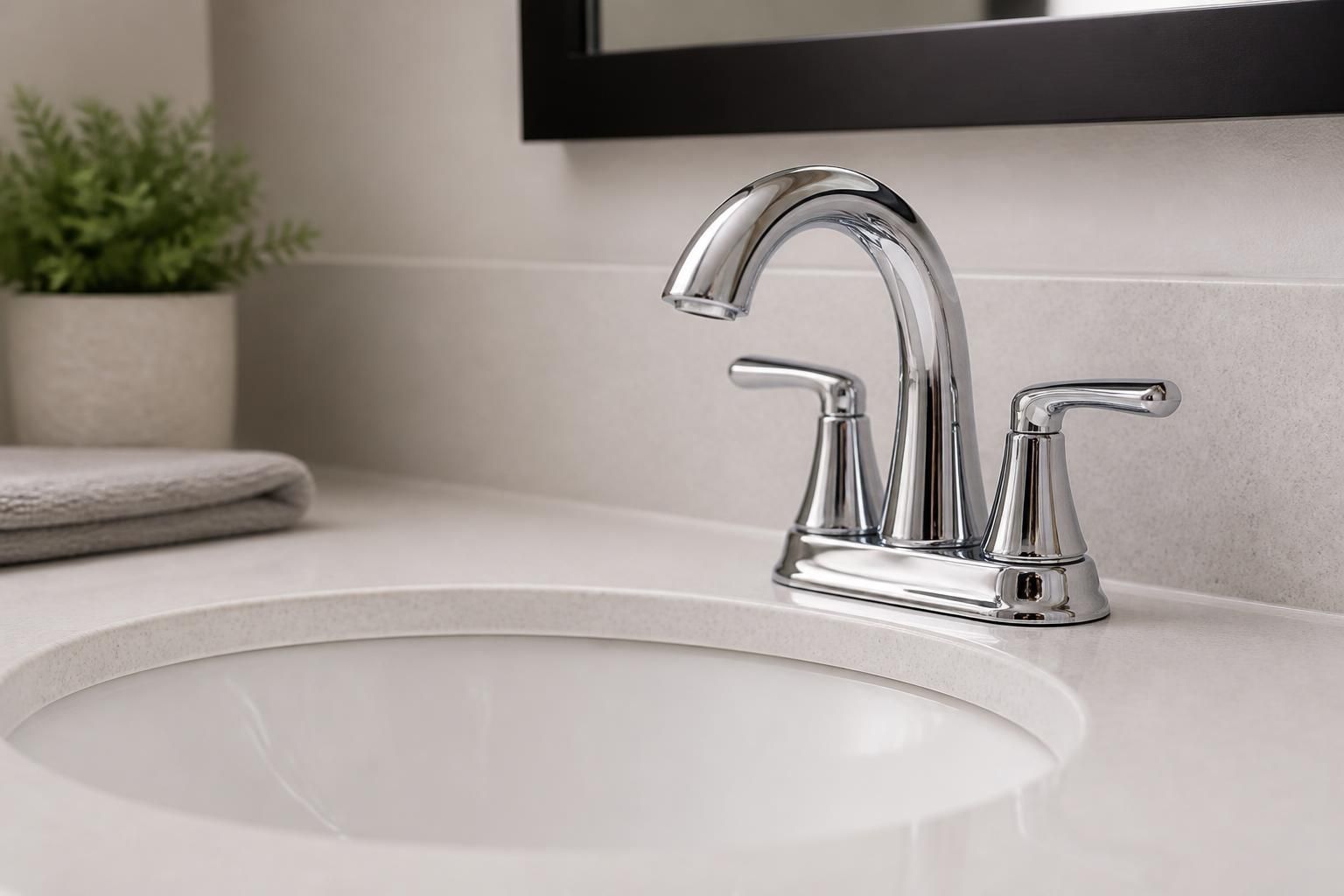
A dripping faucet gets old fast. So does the noise, the stain in the sink, and the water that keeps showing up on the counter. If the handle is stiff, the hot side is weak, or water sprays from the base, you need it checked before the problem gets worse.
Rochester NY Emergency Plumber helps homeowners across Rochester, New York with faucet repair that targets the leak, the worn parts, and the cause behind the mess. Call now, describe what the faucet is doing, and we will help you take the next step.
Some faucet problems start small and then spread. A slow drip can become constant. A loose handle can turn into a shutoff that will not seal. Water around the base can damage the sink cabinet before you notice it.
Faucet trouble often shows up as one or more of these signs:
If you see any of that, the faucet needs attention. The longer it runs, the more likely it is to stain fixtures, waste water, and damage nearby wood or drywall.
If the faucet is leaking, start with the easiest step first. Do not force the handle. Do not keep turning it tighter and tighter. That can break internal parts or strip the stem.
If you can safely reach the shutoff valve under the sink, you may close it until help arrives. If the valve is stuck or leaking too, leave it alone and wait for repair.
Faucets wear out in a few common ways. Some problems are inside the faucet body. Others start with the water supply connection or the shutoff valve. A quick look can tell a lot, but the fix depends on the style of faucet and the damaged part.
Washers, cartridges, seals, and O-rings can wear down from regular use. Once that happens, the faucet may drip even when the handle is closed all the way. Replacing the worn part often stops the leak.
Supply lines, mounting hardware, and threaded joints can loosen over time. That can let water escape under the sink or around the base. Tightening the right connection matters, but it has to be done carefully so another part does not crack.
Mineral buildup and corrosion can make handles stiff and seals uneven. If the faucet has been leaking for a while, the damage may go beyond one simple part.
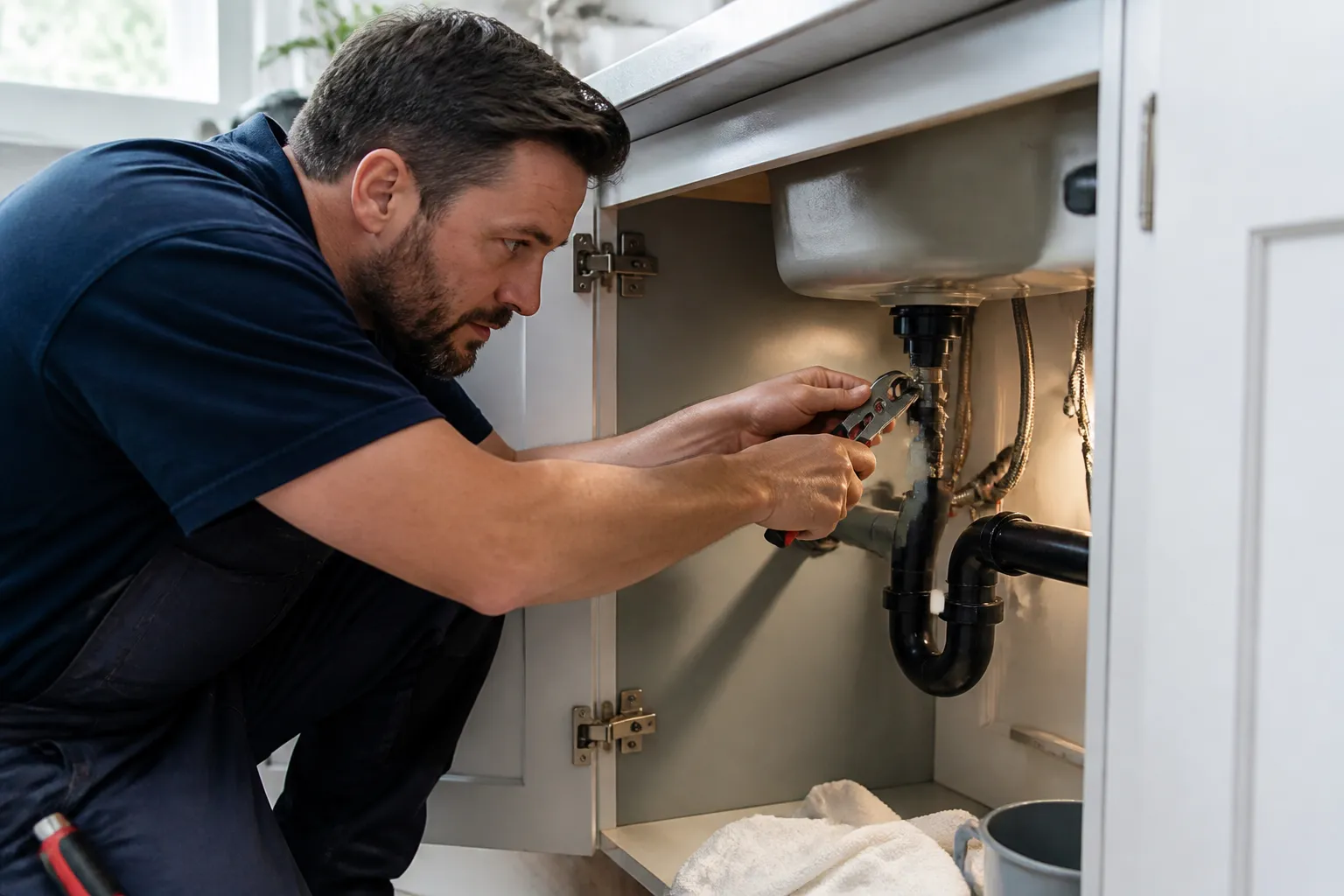
A licensed local plumber starts by finding where the water is coming from. A faucet can leak at the spout, the handle, the base, or a supply connection, and each one points to a different repair.
Once the problem is isolated, a licensed local plumber may replace worn seals, repair or swap a cartridge, secure loose connections, or address damaged shutoff valves and supply lines tied to the fixture. If the faucet body is too worn or cracked, repair may not be the right move and replacement may be the cleaner fix.
We keep the work focused on what the faucet actually needs. That means less guesswork and a better chance of stopping the leak without extra damage to the sink area.
Different faucets fail in different ways. A kitchen faucet is used constantly. A bathroom faucet may drip from a worn cartridge. A laundry or utility sink faucet may leak at the handle or connection points after years of use.
We work on common residential faucet setups found throughout Rochester, New York, including:
The style matters because the repair parts are not always the same. Bringing the wrong part wastes time. Matching the faucet type to the symptom helps get the repair done with fewer surprises.
A small drip can seem harmless, but water always finds a path. It can soak wood, stain a vanity, swell particle board, and leave behind mold-friendly damp spots under the sink. A slow leak can also hide a bigger problem at the supply line or valve.
There is another cost too. A faucet that runs all day wastes water every hour it stays unfixed. If the handle is hard to close, people often over-tighten it, which can make the problem worse and lead to a full fixture failure.
Getting the faucet checked early can keep the repair simpler. It can also protect the cabinet, the countertop, and the plumbing connections below.
When you call Rochester NY Emergency Plumber, we want to hear what the faucet is doing. Let us know whether it drips, sprays, rattles, leaks under the sink, or will not shut off cleanly. If you can, mention whether it is the kitchen, bathroom, or utility sink.
Before the visit, clear out the cabinet under the sink if you can do so safely. That gives easier access to the faucet body, shutoff valves, and supply lines. If there is standing water, leave it alone and tell us about it.
During the repair, we focus on the fixture, the connection points, and the cause of the leak. If another part is worn, we will point that out so you know what needs attention next.
Usually a worn seal, cartridge, washer, or O-ring is no longer sealing the water path. The exact part depends on the faucet style.
That can mean the faucet base is loose, the seal has failed, or water is escaping from a connection under the sink and traveling upward or outward.
Often yes. A loose handle may need tightened hardware, a worn internal part, or a component replacement if the handle assembly is damaged.
That can point to a partial blockage, a worn faucet part, or a supply problem on the hot side. The source needs to be checked before parts are changed.
No. Many faucet problems can be repaired by replacing a worn component or fixing a connection. Replacement is usually considered when the fixture body is too damaged or worn out.
It is better to stop using it until it is checked. Small leaks can damage the cabinet and often get worse with use.
If your faucet is dripping, loose, noisy, or leaking under the sink, call Rochester NY Emergency Plumber now. We help homeowners in Rochester, New York get the problem handled before it spreads.
Rochester NY Emergency Plumber
Phone: (585) 986-5408
Email: dispatch@rochesternyemergencyplumber.com
Tell us what the faucet is doing, and we will take it from there.
Get Help Now
Tell us what is happening. We connect you with a licensed local plumber fast. Call or text now, or send the short form below.